
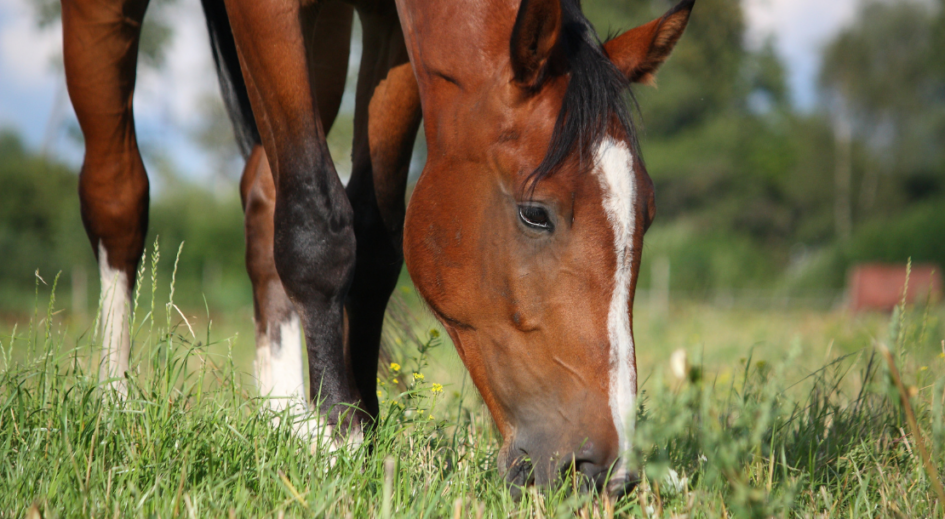
When spring and fall roll around, so does deworming season. But with so many products and compounds available, choosing the right one for your horse can feel overwhelming. The good news? You don’t have to guess. Modern parasite control is smarter, safer, and far more effective when guided by science.
Deworming your horse used to be pretty simple: pick a dewormer, give it every few months, and rotate through different products throughout the year. Today, parasite control looks a little different.
Instead of following the same deworming schedule for every horse, veterinarians now recommend using fecal egg counts and your horse’s individual risk factors to determine when treatment is actually needed. This approach helps control parasites while limiting unnecessary deworming and slowing the development of dewormer resistance.
So, when should you deworm your horse? The short answer is: it depends on the horse, the parasites you’re targeting, and what your fecal egg count tells you.
Start With a Fecal Egg Count
Before reaching for a dewormer, start by finding out how your horse is shedding parasites.
A fecal egg count measures parasite eggs in a sample of your horse’s manure. It can help identify horses that are low, moderate, or high shedders of strongyle eggs and determine which horses may benefit from more frequent treatment.
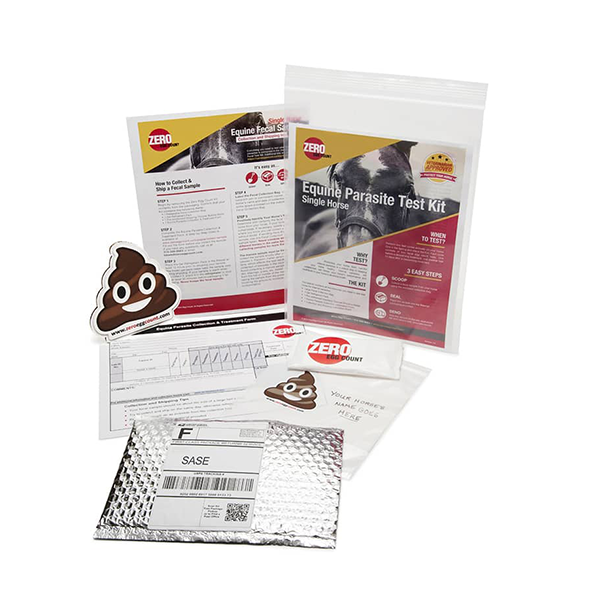
Fecal egg counts should be performed once or twice a year as part of an overall parasite control program. Horses that shed more parasite eggs may need additional targeted deworming treatments throughout the year.
A fecal egg count isn’t a test for every type of parasite, and a low result doesn’t necessarily mean a horse has no parasites. For example, tapeworms and certain other parasites aren’t reliably identified through a standard fecal egg count. Your horse’s age, history, environment, and overall parasite-control plan still matter and should be taken into account.
How Often Should You Deworm a Horse?
There isn’t one deworming schedule that works for every horse.
Equine veterinarians now recommend moving away from fixed-interval deworming, such as automatically giving every horse a dewormer every 6–8 weeks throughout the year. Instead, horses should receive baseline treatments, with additional treatments targeted toward horses that need them based on fecal egg counts and other risk factors. For many adult horses, that means deworming once or twice a year as a baseline, with the rest of the program determined by fecal egg counts and your veterinarian’s recommendations.
Your horse’s age also matters. Young horses, particularly foals and horses under five, can have different parasite risks than mature adults. Ascarids, for example, are a greater concern in young horses, and resistance to some dewormers is common.
Deworming factors to consider include:
- Age and life stage
- Fecal egg count results
- Pasture turnout and stocking density
- Exposure to other horses
- Geographic location and climate
- Previous deworming history
- Known parasite resistance on your farm
- Your horse’s overall health and risk factors
If you manage several horses, don’t assume they all need the same program. Horses living in the same barn can still have very different parasite-shedding patterns.
What About Spring and Fall Deworming?
You may have heard that every horse should be dewormed in the spring and fall. While seasonal treatments can still have a place in a parasite control program, the timing and product should be based on what you’re trying to treat rather than the calendar alone.
Parasite activity changes throughout the year, and some treatments are more useful at certain times. A fall treatment with a macrocyclic lactone, for example, can help control bots and other parasites, although bots should not be the only factor determining your deworming plan. Read our blog to learn everything you should know about bots.
Tapeworms are another consideration. Standard fecal egg counts aren’t a reliable way to detect tapeworm infections, so your veterinarian may recommend including a treatment effective against tapeworms as part of your horse’s parasite-control program.
The important takeaway? Don’t deworm just because spring or fall is on the calendar. Use the season as one piece of the puzzle, not the entire plan.
Choosing the Right Horse Dewormer
Once you’ve determined that your horse needs treatment, the next step is choosing the right product.
Different dewormers work against different parasites, and parasite resistance can vary across locations. Common equine dewormer ingredients include:
Ivermectin
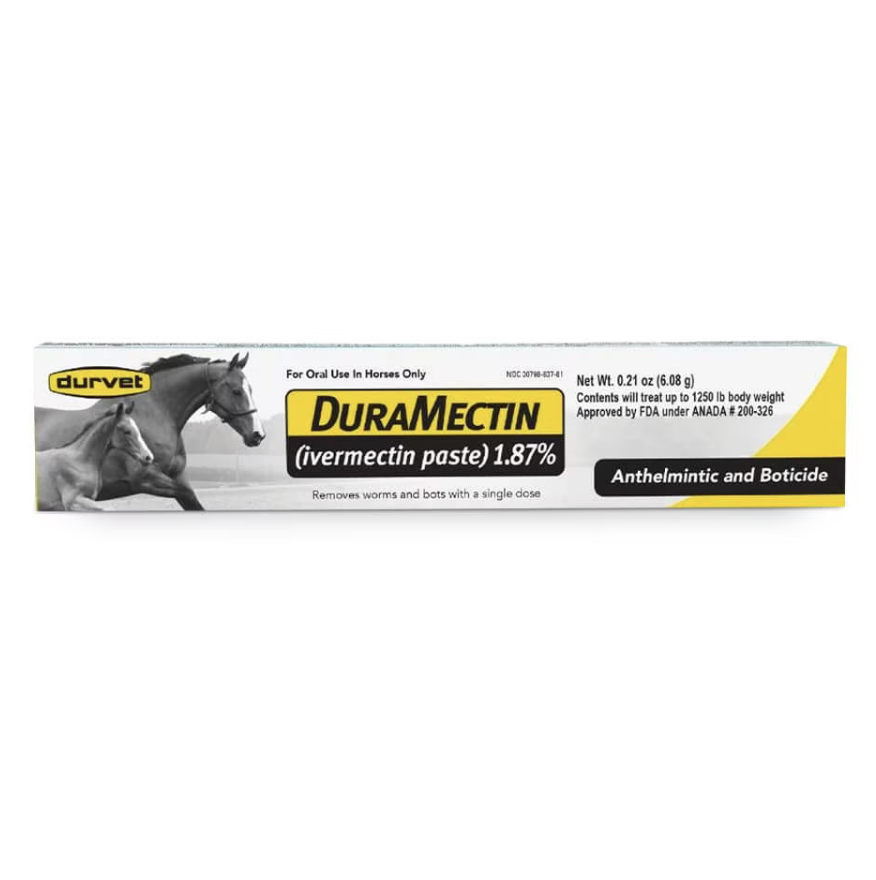
Ivermectin is a broad-spectrum dewormer commonly used in horses. It is effective against several important internal parasites and is also used for bot control.
Moxidectin
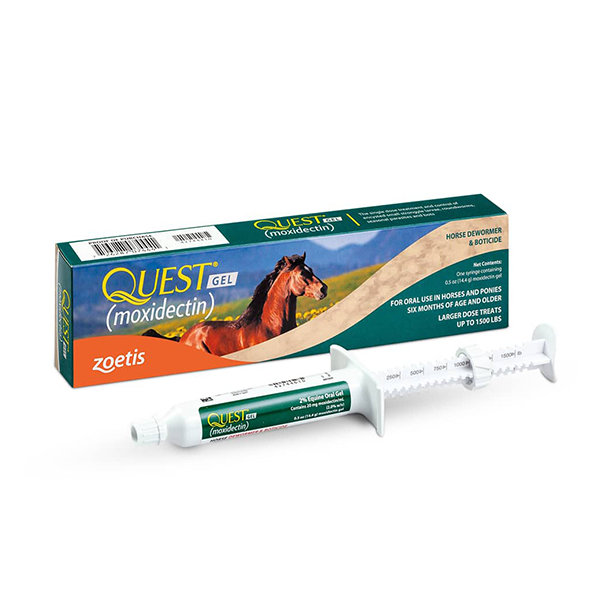
Moxidectin is another macrocyclic lactone used for broad-spectrum parasite control, including adult and larval small strongyles.
Pyrantel
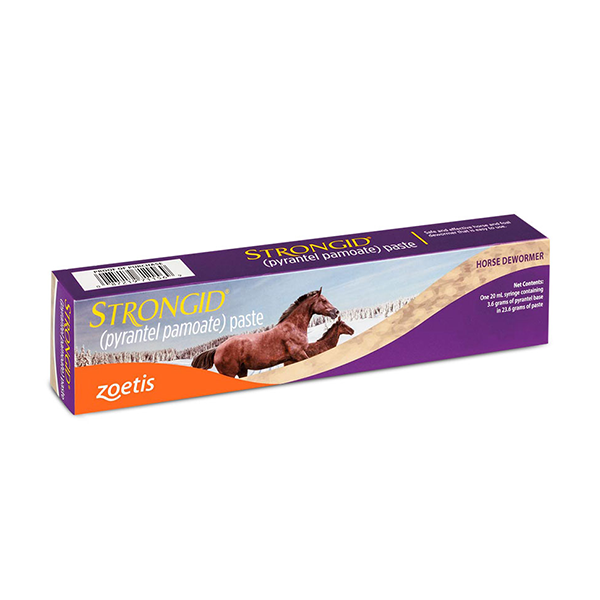
Pyrantel is used against several intestinal parasites and can also be used at an appropriate dose for tapeworm control.
Fenbendazole

Fenbendazole is a benzimidazole dewormer used against certain intestinal parasites. However, resistance is common among small strongyles, so it should not automatically be considered an effective choice for every horse.
Praziquantel
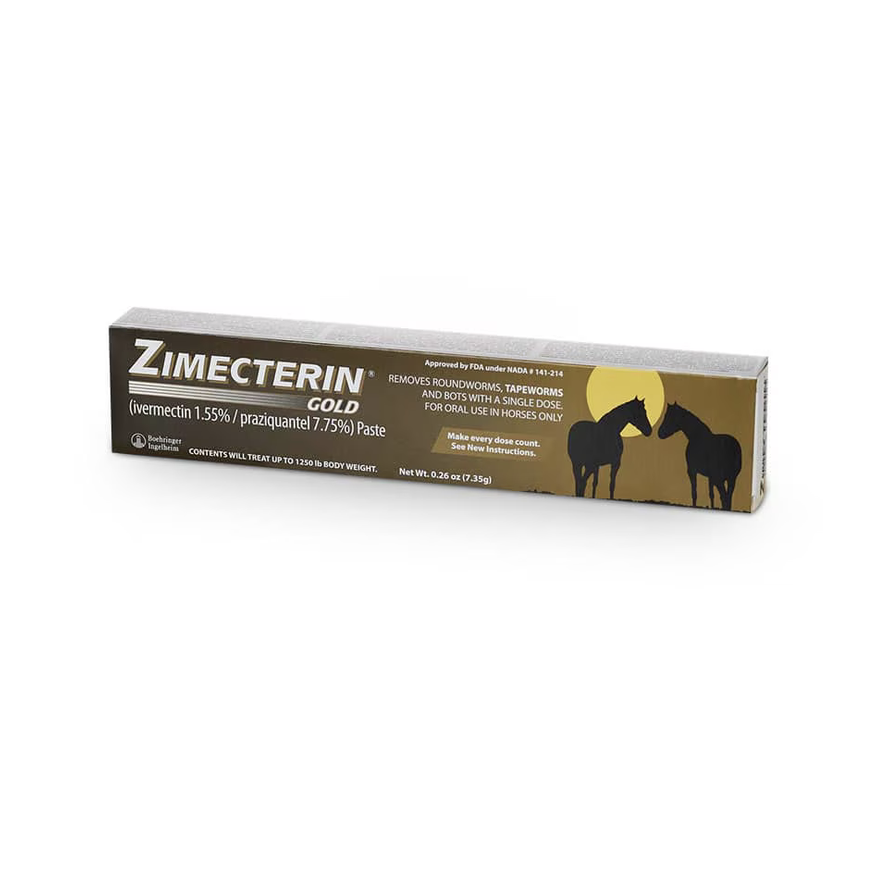
Praziquantel specifically targets tapeworms and is commonly combined with ivermectin or moxidectin in combination dewormers.
The goal isn’t to find the “strongest” dewormer. It’s to use a product that is effective against the parasites you’re targeting and appropriate for your horse’s individual program.
A Smarter Deworming Schedule for Your Horse
A good parasite-control program doesn’t have to be complicated. Start with the basics:
1. Test.
Use fecal egg counts to determine how your horse is shedding strongyle eggs.
2. Identify risk.
Consider your horse’s age, turnout, environment, previous parasite history, and other risk factors.
3. Treat strategically.
Use a dewormer when treatment is indicated and choose a product that targets the parasites you’re concerned about.
4. Monitor effectiveness.
Work with your veterinarian to evaluate whether your dewormer is still effective on your farm.
5. Repeat.
Fecal egg counts are an ongoing part of parasite management, not a one-time test. Re-testing helps you ensure your deworming program is working and helps you catch resistance early.
And don’t forget the rest of your parasite-control routine. Regular manure removal, avoiding overstocked pastures, rotating or resting grazing areas when practical, and keeping feed and water sources clean can all help reduce parasite exposure.
When in Doubt, Talk to Your Veterinarian
There isn’t a one-size-fits-all horse deworming schedule, and that’s actually a good thing.
A targeted program means your horse gets the parasite control they need without automatically receiving unnecessary treatments. Your veterinarian can help you determine how often to perform fecal egg counts, which parasites are most important to watch for, and when a dewormer should be used.
Looking for horse dewormers and parasite-control essentials? FarmVet carries a variety of equine dewormers and parasite control kits to help you stay on top of your horse’s routine care.
Always follow product label directions and consult your veterinarian when developing a parasite-control program for your horse.
Keep Reading: Are You Ready for Clipping Season?
As the seasons change, so do your horse’s care needs. Learn how to prep your horse (and your tools) for a safe, efficient body clip in our guide: Get Your Horse Ready for Clipping Season.
2 Pingbacks