
The following blog was contributed to FarmVet by the team at Poseidon Animal Health, written by:
Tiffany L Hall, DVM, DACVIM (LAIM), DACVECC (LA)
Lexington, KY, USA
Colic is the most common equine emergency experienced by people who own and work with horses. Managing a horse with colic symptoms can be distressing, both from an emotional and financial standpoint. But preparation ahead of the colic will help reduce the decisions you must make and can lessen the stress experienced.
Preparing For A Colic
Having an established relationship with a veterinarian and keeping up with preventative health care is the best approach to preventing colic in your horses. With your vet’s guidance, you can also make plans and decisions ahead of an emergency.
Conversations such as when your vet would like to be called about any concerns; their on-call schedule and any accommodations made for times they are not seeing emergencies; and the referral process, including financial and transportation considerations, may all be reviewed.
Having these practical discussions and making critical decisions during a routine visit can help save precious time and personal energy during an emergency.
Signs of Colic in Horses
Colic can be preceded by subtle changes in manure output or consistency, appetite or behavior. Active colic may be observed by pawing, flank watching, laying down at unusual times, or active colic such as restlessness, rolling or thrashing.
After notifying your veterinarian of your colic concerns, what should you do?
● Follow your veterinarian’s instructions regarding medications, access to food and water, and further monitoring. Generally speaking, horses should be allowed access to water while experiencing colic to help prevent critical dehydration.
● Stay safe. An uncomfortable horse can become an unpredictable horse and the danger to yourself increases with increasing pain. Please do not attempt to handle or walk a violently colicky horse.
● Notify your veterinarian immediately if symptoms progress. If a previously quiet and calm horse suddenly begins to get up and go back down frequently, roll continuously, or throw itself onto the ground, this is a significant change your veterinarian needs to be made aware of.
What To Do For A Horse That Colics
There is a lot of advice shared online and between friends regarding at home care of the colicky horse. However well meaning some of this advice may be, it is not always in the best interest of your horse.
Next, we are going to address some of the most common myths we hear regarding colic and a recommended approach to each.
MYTH 1: Keep the horse walking.
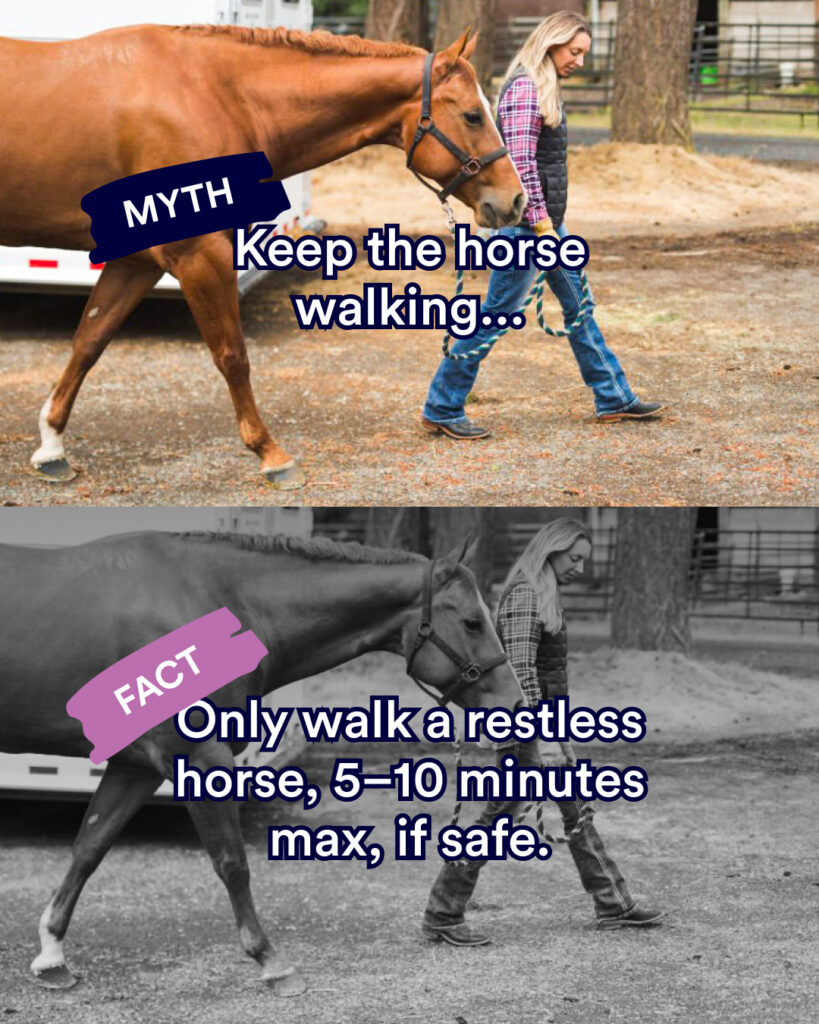
While walking helps maintain gastrointestinal motility, we prefer that a horse be walking for no more than 5-10 minutes or as directed by your veterinarian.
A colicky horse which is standing or lying down does not need to be walked. Walking is generally reserved for horses which are restless, rolling, or frequently up and down and are safe to walk
A horse that is trying to go down while being walked, should be allowed to lie down. Never walk yourself or the horse to exhaustion.
MYTH 2: Never let a colicky horse lie down.
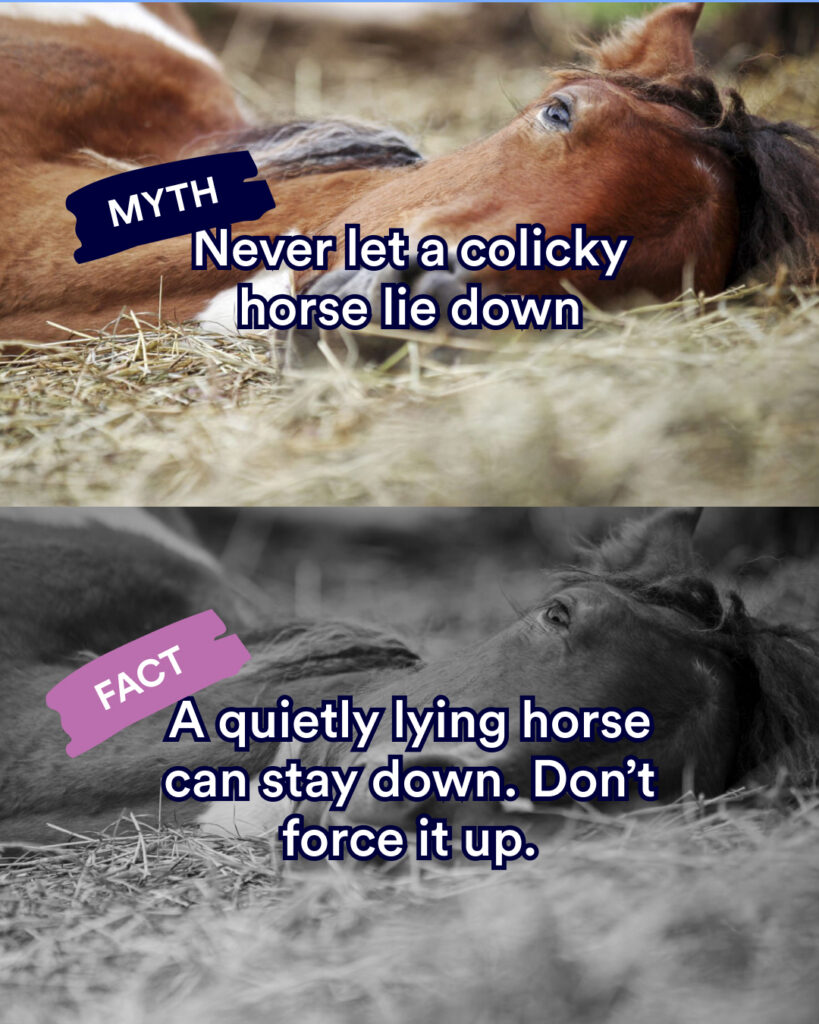
A horse that is quietly lying down or half rolling may be allowed to demonstrate their pain in this manner without being forced up or to walk.
Focus on preventing injury to the horse and handlers, not on forced movement.
MYTH 3: Rolling will cause the intestines to twist.
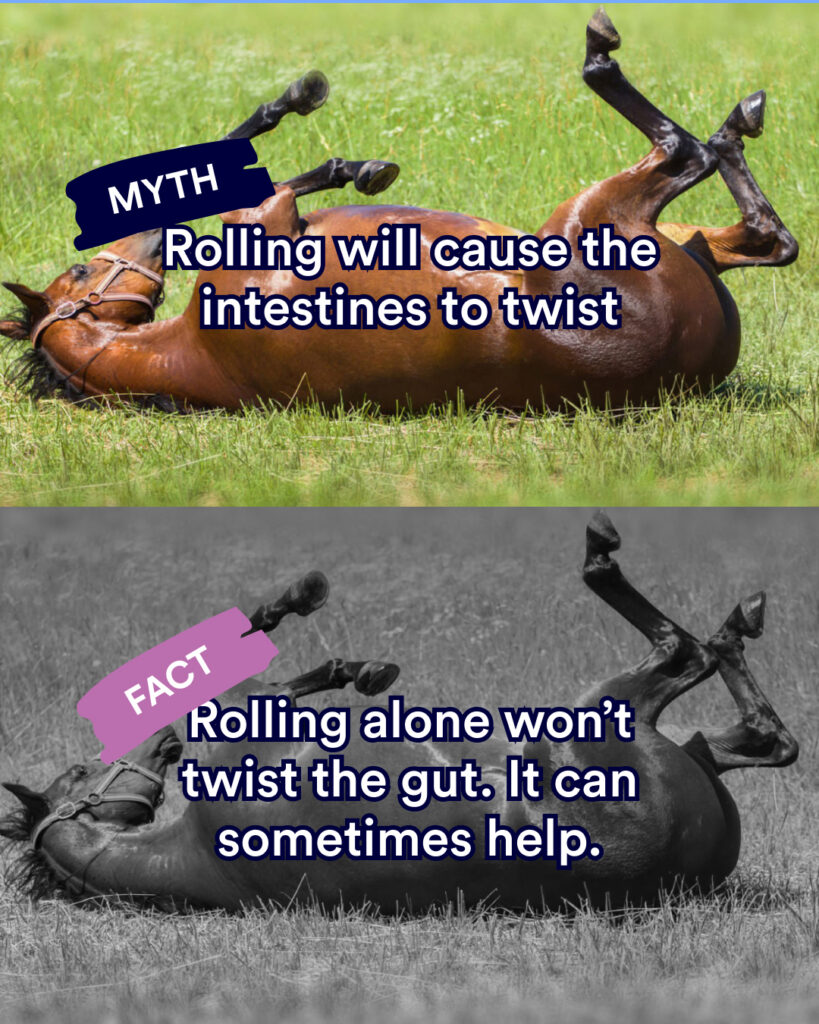
Rolling is a behavior response to pain and in some cases, the horse’s attempt to correct the cause of colic on their own. Rolling in and of itself will not cause the intestines to twist and is considered a medically appropriate therapy for certain types of colic.
Prevent rolling only when it may put the horse in a precarious position and it is safe for a person to handle the horse.
MYTH 4: Give pain medications immediately.
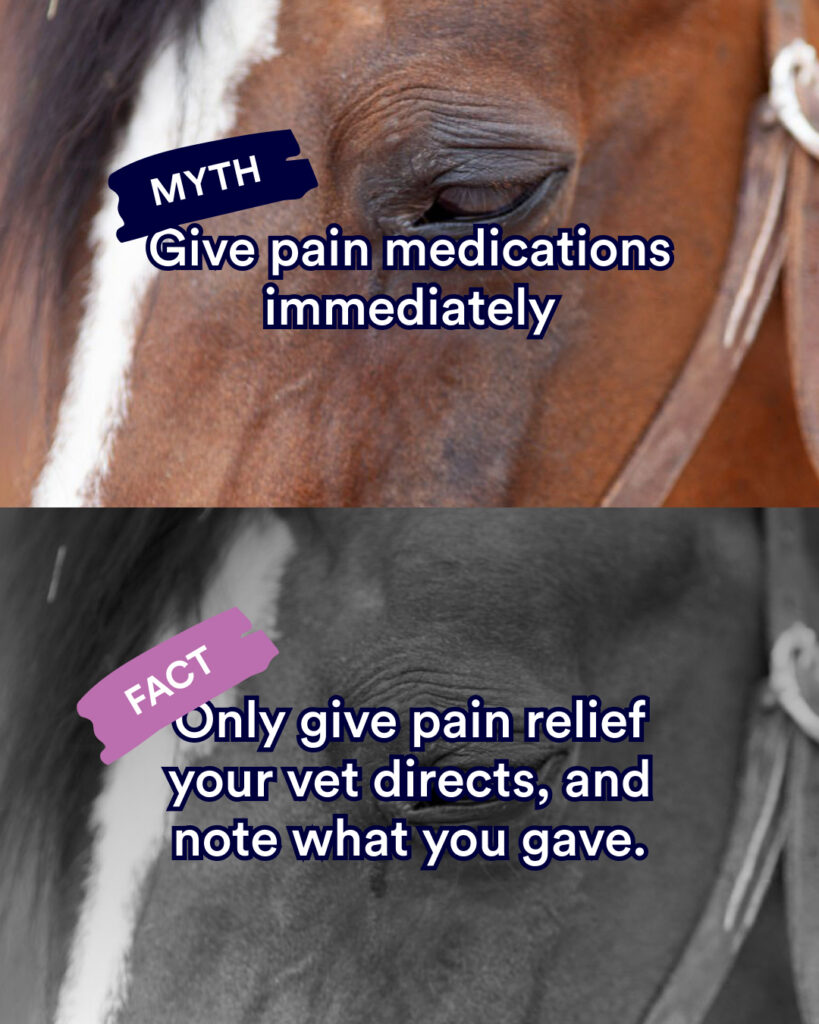
Follow the advice of your veterinarian regarding administration of any pain medications or sedatives. Confirm the drug, dose, route, and timing of administration. This information is very important for your veterinarian to appropriately assess your horse’s status.
MYTH 5: Oral home remedies are harmless.
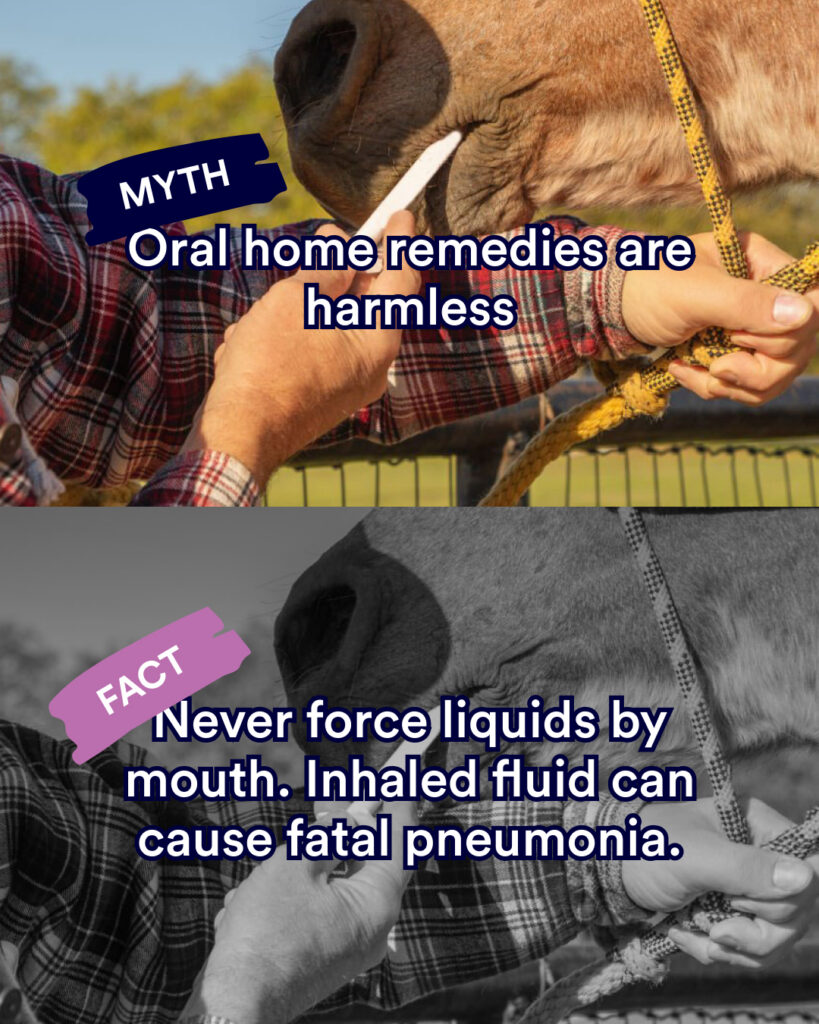
Forced ingestion of liquids by syringe, tube or hose is never recommended. Accidental inhalation of liquids or oils into the lungs can lead to a fatal pneumonia.
Please follow recommendations from your veterinarian regarding anything administered by mouth.
MYTH 6: Give omeprazole to treat colic.
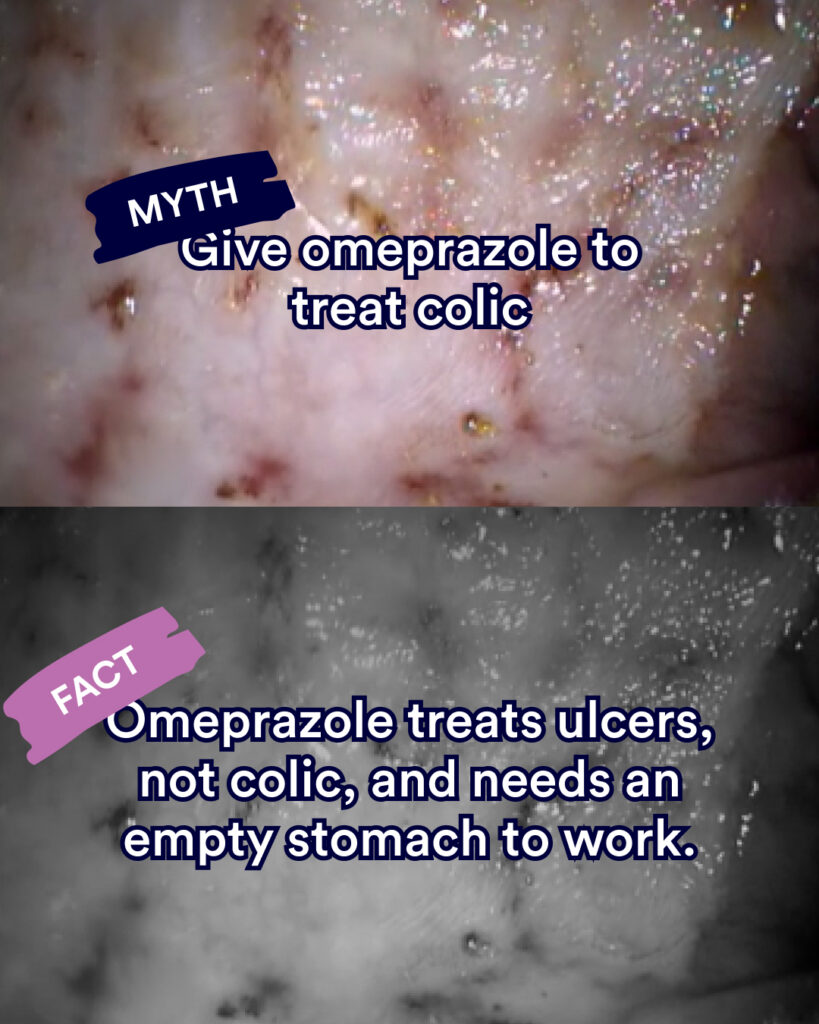
Omeprazole is designed to treat gastric ulceration, not colic, by preventing acid production in the stomach. Oral administration requires 2 hours to reach efficacy on an empty stomach.
If your horse has had anything to eat in the preceding 2-4 hours, omeprazole is unlikely to be absorbed correctly to have any effect at all.
MYTH 7: Probiotics cure colic.
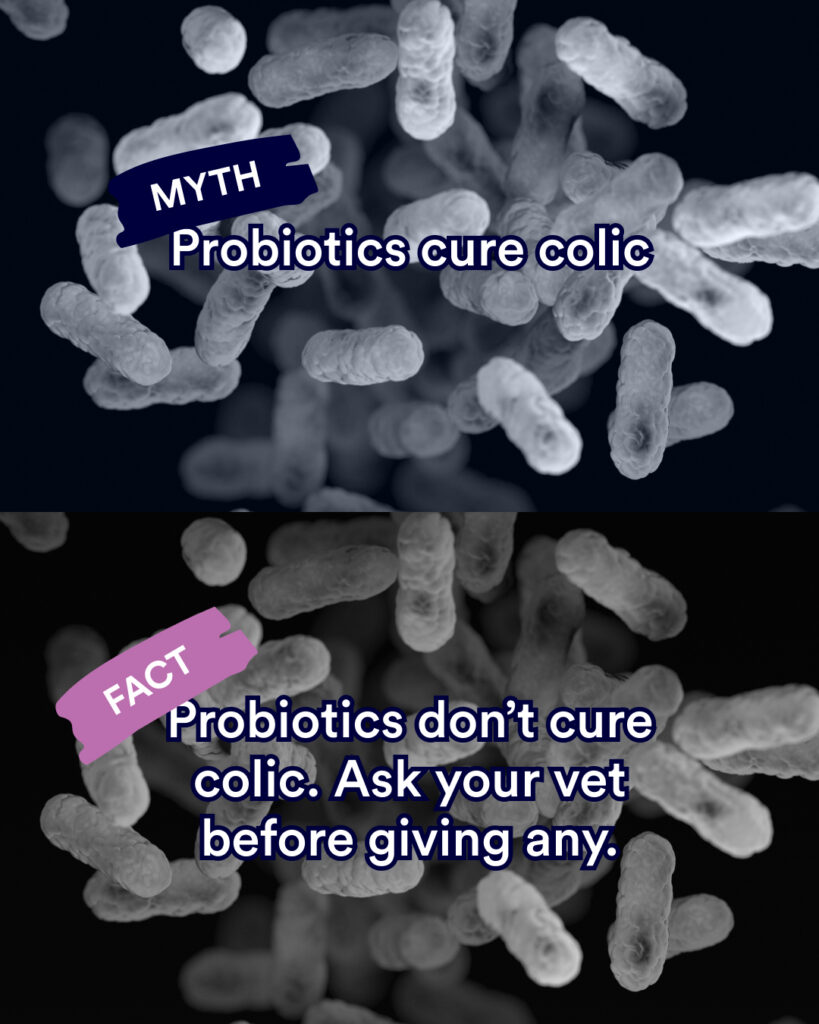
Probiotics are live microorganisms designed to exert an effect on the horse’s hindgut microbiome through long term administration. However, there is little research supporting their utility in horses and most veterinary formulations do not contain what is listed on the label.
Routine probiotic administration may be contraindicated as a 2015 study identified an association between probiotic administration and recurrent colic in 60 horses. However, a causal relationship was not identified.
As with all therapeutic interventions, please consult your veterinarian before administering a probiotic to a horse with colic.
MYTH 8: If a horse poops on the trailer, colic is resolved.
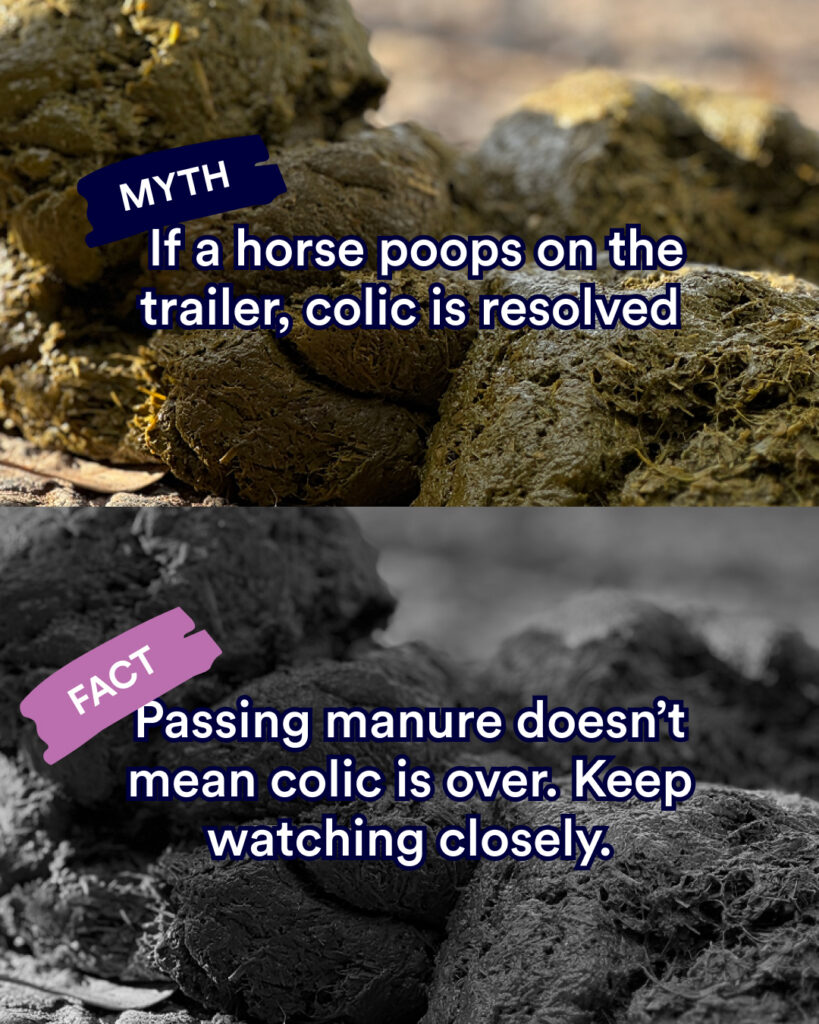
Trailer rides can help relieve colic symptoms by encouraging gastric motility, repositioning of the GI tract, and prompting manure passage or passing of gas. However, the manure we observe over the course of day often comes from the last 12 feet of the horse’s 100 foot long gastrointestinal tract.
Therefore, the act of passing manure alone is not confirmation that the cause of colic symptoms is resolved. A horse whose symptoms appear improved after trailering should still be monitored closely for recurrence of colic symptoms.
Always Be Prepared
While colic is something we hope to never experience in our horses, the reality is most of us will. However, we can make it less daunting and scary by being prepared. Having a good working relationship with your veterinarian; maintaining preventative care such as dental and parasite control; establishing a financial and transport plan should referral be needed; and knowing what steps to take during a colic episode can go a long way to easing your mind in the moment.
Supporting Gut Health for Long-Term Digestive Wellbeing
While knowing how to respond to colic is essential, supporting your horse’s digestive health every day is equally important. Dr Erin Roddy, DVM, Chief Veterinary Officer at Poseidon Animal Health, emphasises that restoring and maintaining a healthy gut environment is one of the foundations of helping horses thrive.
A healthy, balanced digestive system supports nutrient absorption, gut function, overall wellbeing and resilience to everyday challenges. With the right nutrition, management practices and targeted digestive support, horse owners can take proactive steps to promote long-term gut health and address some of the factors associated with digestive disturbances.
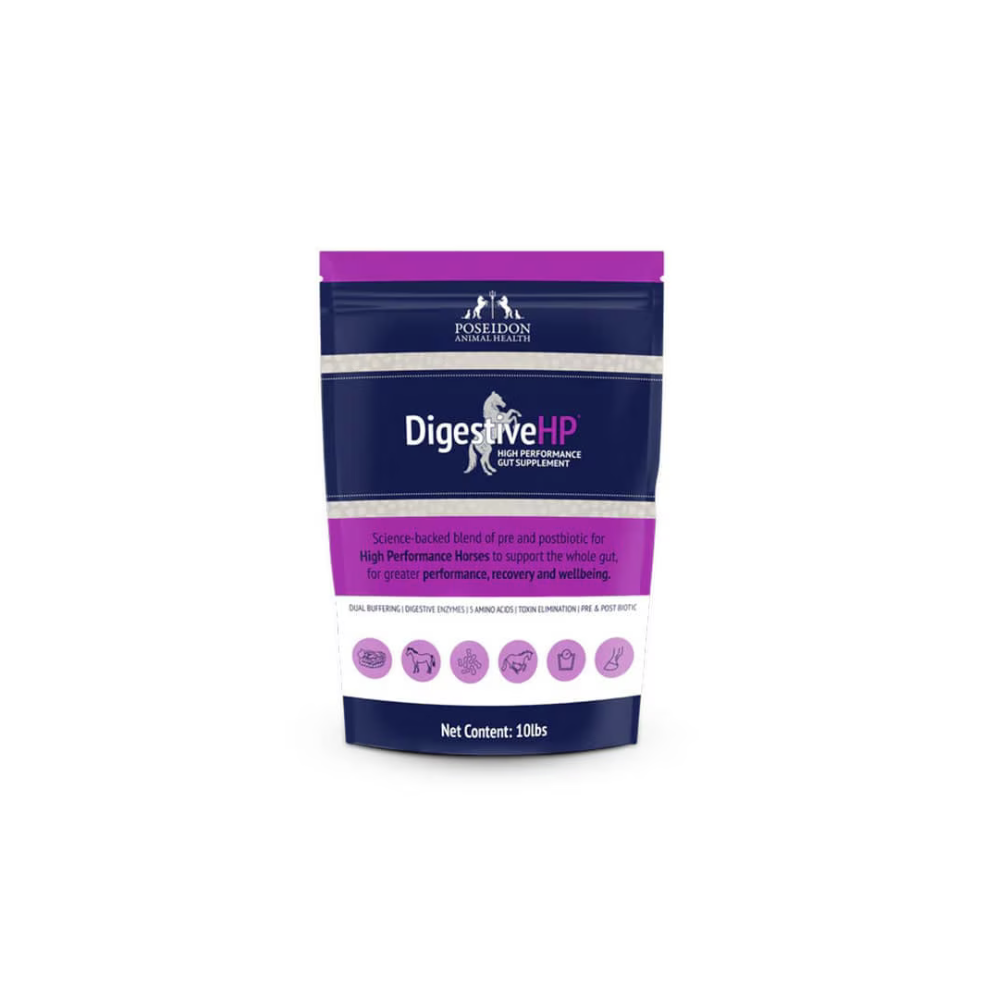
Poseidon Animal Health’s Digestive HP has been developed to support both foregut and hindgut health as part of a comprehensive daily digestive care program. While no supplement can guarantee the prevention of colic or replace veterinary care, supporting gut health is an important part of responsible horse management.
For more information and to support your horse’s digestive health, shop Poseidon Animal Health’s Digestive HP at FarmVet. Continue reading to learn more about Poseidon Animal Health Supplements.
Leave a Reply