
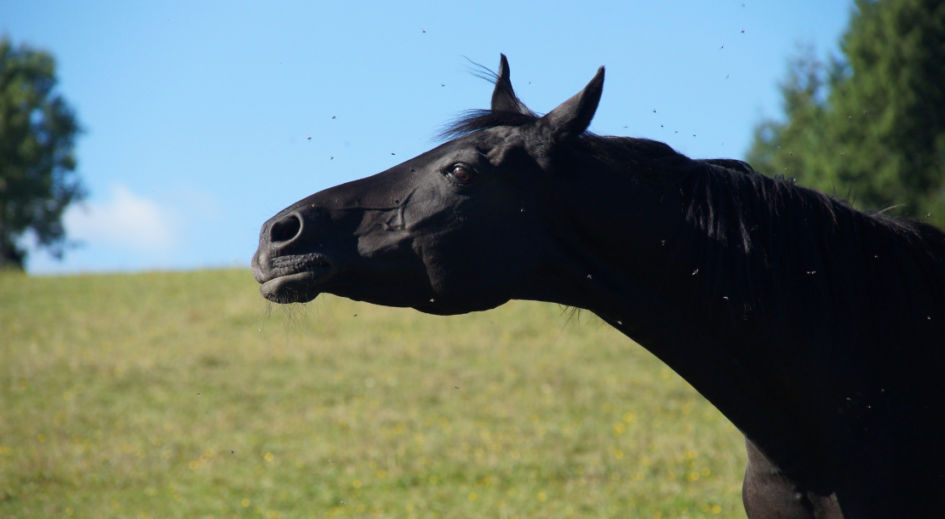
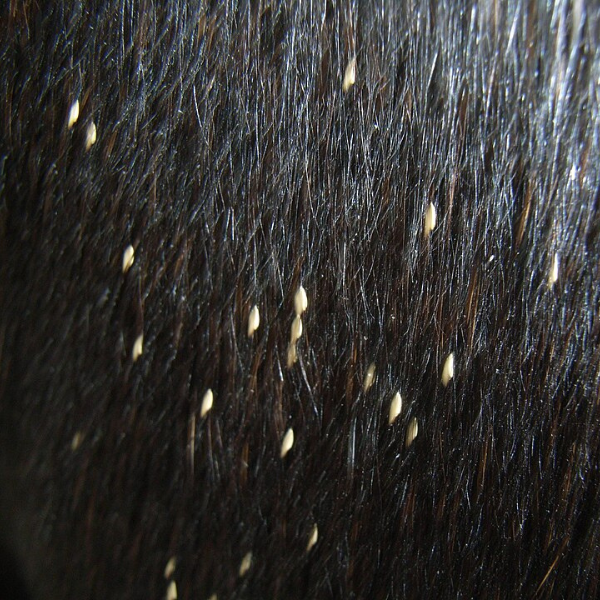
If you’ve ever noticed clusters of tiny yellow or cream-colored specks stuck to your horse’s hair, you may have wondered what they are. Those stubborn little spots are likely bot fly eggs, and while they may be unsightly, they’re also a normal part of life with horses during bot fly season.
Bot eggs are easy to spot on many horses, particularly in late summer and fall. Knowing what they are, where they come from, and what to do about them can help you stay one step ahead of bots as part of your horse’s overall parasite control program.
What Are Bot Eggs?
Bot eggs are laid by adult bot flies. Unlike many internal parasites that spread when a horse consumes contaminated pasture, bots begin their life cycle right on the horse’s hair.
The eggs are small, usually yellow to cream-colored, and firmly attached to individual hairs. Depending on the species of bot fly, you may find them on the legs, neck, shoulders, withers, or underneath the jaw.

The adult flies can be especially irritating to horses while they are laying eggs. You may notice your horse restlessly swishing their tail, stomping, or trying to avoid the flies.
And those eggs aren’t just something to brush off and forget about. Once they hatch, the larvae can eventually make their way into the horse’s mouth then stomach. There, they attach to the stomach lining and continue developing.
How Do Horses Get Bots?
The bot life cycle is a little different from the parasites most horse owners think about when they hear the word “worms.”
Bot flies lay their eggs directly on the horse. When the eggs hatch, the larvae enter the horse’s mouth when they groom or itch themselves (or another horse). This is also why seeing bot eggs on one horse doesn’t necessarily mean that horse is the only one exposed. Horses that live together can easily transfer exposure when they groom or play with each other.
From there, the larvae migrate through the mouth before eventually reaching the stomach. Bot larvae can remain inside the horse for months before passing out in the manure. They then pupate in the soil and emerge as adult flies, starting the cycle all over again.
Are Bot Eggs Dangerous to Horses?
The good news is that bots are generally considered a mild parasite in horses. Many horses carry bot larvae without showing any noticeable signs of illness.
That doesn’t mean they should be completely ignored, though. Bot larvae can cause irritation and inflammation as they migrate through the mouth and attach to the stomach lining. Heavy infections can contribute to gastric irritation or ulceration, although serious complications are uncommon.
For most horses, bot control is simply one piece of a larger, veterinarian-guided parasite control program.
How Do You Remove Bot Eggs from a Horse?
One of the easiest ways to reduce the number of bot larvae your horse ingests is to remove bot eggs from the hair before they hatch.
A regular grooming routine is the perfect opportunity to check for them, particularly during peak bot fly season. Pay close attention to areas where bot eggs are commonly found, including the legs, neck, shoulders, withers, and jawline.
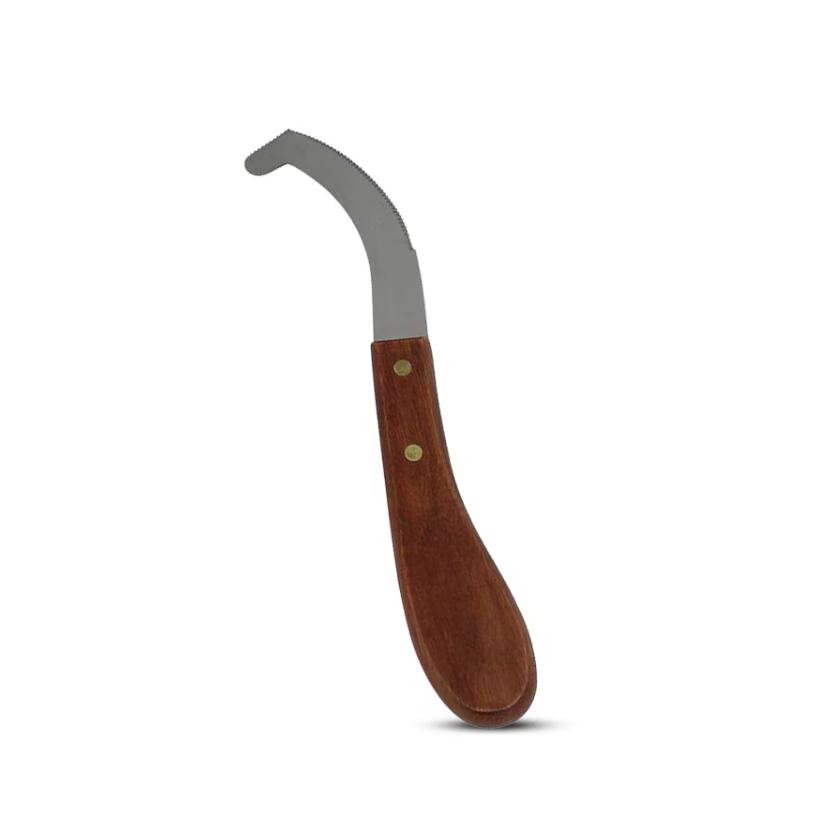
Bot eggs are glued tightly to the hair, so a regular grooming brush usually won’t do the trick. A bot egg scraper or grooming stone helps remove those stubborn eggs without pulling large amounts of hair.
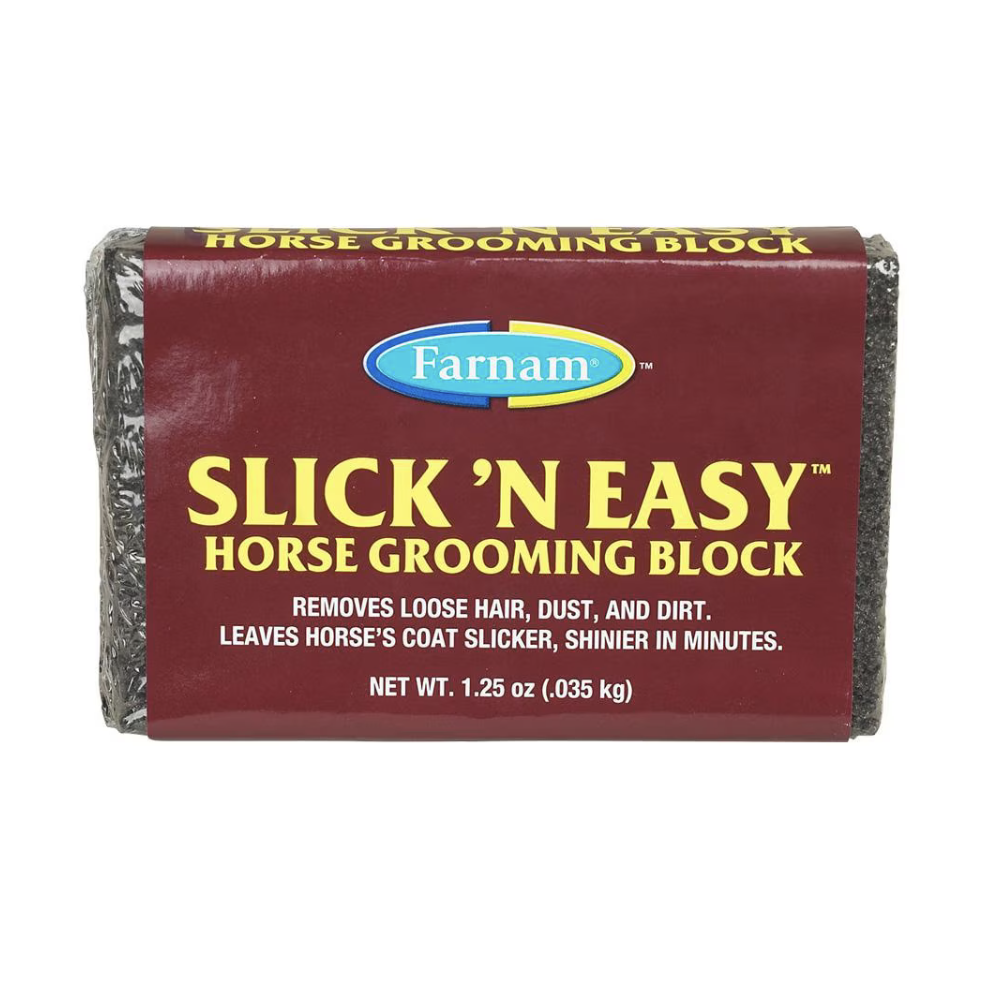
Farnam’s Slick N’ Easy Grooming Block is one option that can be used to remove bot eggs. Use the edge of the block with short strokes and working in the direction of the hair to help loosen difficult eggs.
Does Removing Bot Eggs Replace Deworming?
Not completely. Physically removing bot eggs can reduce exposure, but it doesn’t address larvae that were already ingested. That’s where the appropriate deworming treatment comes in.
Ivermectin and moxidectin are effective ways to address horse bots. Several equine dewormers available from FarmVet contain ivermectin and are labeled for control of bots, including ivermectin pastes and combination products.
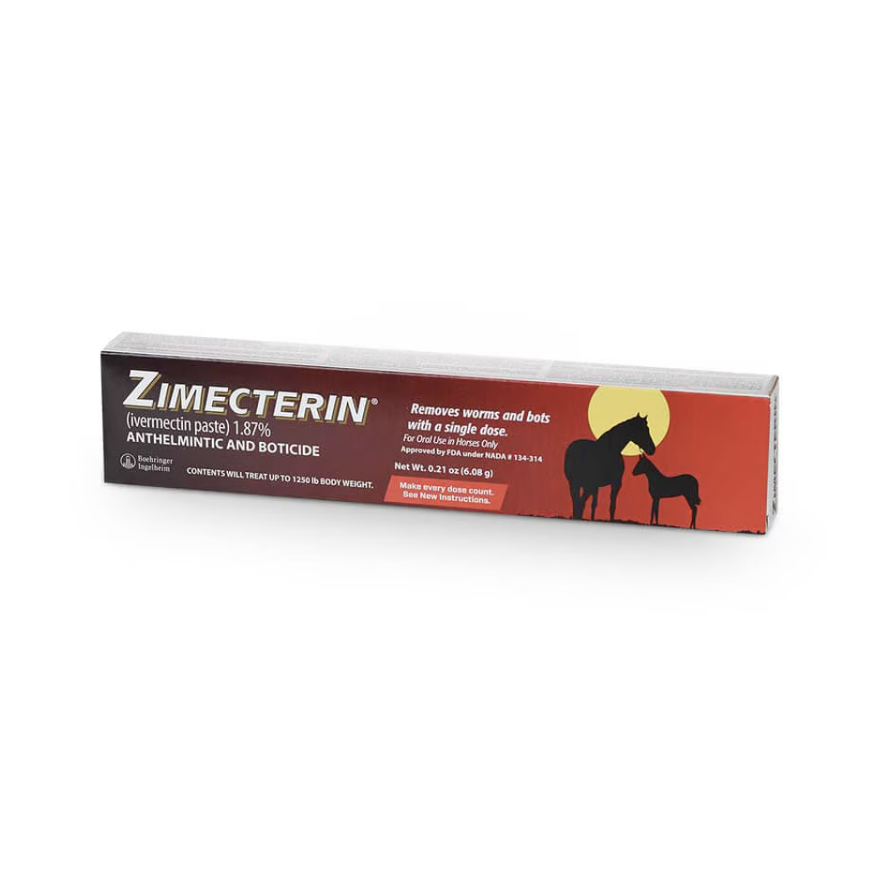
For example, Zimecterin is an ivermectin-based equine dewormer labeled for bots along with several other common equine parasites, while Quest is moxidectin-based. Zimecterin Gold combines ivermectin with praziquantel while Quest Plus combines moxidectin with praziquantel for broad-spectrum coverage and control.
It’s important to remember that a bot treatment is not the same thing as treating every parasite your horse may encounter. Deworming decisions should take into account your horse’s age, environment, parasite exposure, and overall parasite-control program.
For more guidance on choosing the right product, read FarmVet’s Deworming Your Horse: What to Know Before You Dose.
When Should You Treat for Bots?
Bot flies are seasonal, so timing matters.
In many regions, bot activity increases through the warmer months, with eggs becoming especially noticeable toward the end of summer and into fall. Once the bot fly season has ended, a fall treatment can target larvae that are already inside the horse.
The exact timing can vary based on your region and weather, so it’s always a good idea to work with your veterinarian to determine when bot treatment makes sense for your horses.
And while it may be tempting to reach for a dewormer every time you see bot eggs, more frequent treatment isn’t necessarily better. Modern parasite control focuses on using dewormers strategically rather than treating all horses on a fixed schedule year-round.
What Should Horse Owners Do During Fly Season?
A few simple habits can go a long way:
- Check your horse regularly for bot eggs, especially during late summer and fall.
- Remove visible eggs during grooming.
- Use a bot scraper or grooming block designed for removing eggs.
- Keep fly control part of your overall horse-care routine.
- Follow a veterinarian-guided parasite control program.
- Treat for bots at the appropriate time of year rather than automatically deworming every time you see eggs.
Bot eggs may be one of those less glamorous parts of horse ownership, but they’re also a good reminder that parasite control starts before you reach for a dewormer. A few extra minutes with a grooming tool, combined with a thoughtful deworming program, can help keep your horse’s parasite burden under control.
Shop Bot & Parasite Control at FarmVet
Whether you’re looking for an effective bot scraper for your grooming kit or a dewormer to fit into your horse’s parasite-control program, FarmVet has the horse health products you need to stay prepared through every season. Shop horse dewormers and parasite control at FarmVet to keep your horse feeling their best.